· ai-devtools
Google donates Agent Substrate, gVisor to CNCF for secure AI agents
The introduction of Agent Substrate and gVisor to the Cloud Native Computing Foundation (CNCF) signifies a move toward vendor-neutral open-source governance for key components of Google's AI agent…
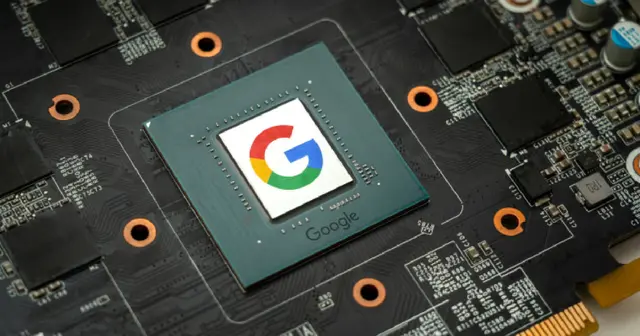
The introduction of Agent Substrate and gVisor to the Cloud Native Computing Foundation (CNCF) signifies a move toward vendor-neutral open-source governance for key components of Google's AI agent infrastructure. This initiative aims to tackle two significant hurdles encountered when deploying autonomous agents at scale: the necessity of securely running code generated by AI, and the substantial computational strain caused by agents that frequently pause and then resume operations. Furthermore, Google is also contributing OpenRL, its open-source project for orchestrating reinforcement learning, to this ecosystem. These projects collectively target various segments of the agent infrastructure, ranging from managing isolated code execution to handling agent lifecycles and coordinating massive training tasks, all with the aim of creating an open bedrock for applications driven by agents, mirroring how Kubernetes standardized container orchestration.
Google contends that the operational patterns of AI agents diverge fundamentally from those of typical Kubernetes workloads. A standard application generally initiates, serves requests, and maintains continuous operation. In contrast, an AI agent might execute a tool or piece of code for only a short duration before pausing to await model inference, external API responses, or human sign-off. Google estimates that these agents can remain idle for 90-95% of their time, even while maintaining vital state information such as memory, file contents, repositories, and active sessions. Maintaining every agent within its own dedicated Pod proves resource-intensive, yet scaling down to zero introduces delays because environments must be rebuilt upon reactivation. Moreover, when thousands of short-lived execution environments are repeatedly created and destroyed for large-scale agent evaluations, this can overload the Kubernetes control planes.
To counteract these issues, Google engineered Agent Substrate to decouple the agent's state (referred to as actors) from the compute resources (workers) responsible for running it. Actors encapsulate individual agent sessions and preserve their state, including their execution context, memory, and filesystem data. Meanwhile, workers offer reusable, pre-warmed environments sourced from shared Kubernetes pools. When an agent requires resumption, Substrate assigns it to an available Worker and restores its prior state. If the agent becomes inactive, its state can be saved, allowing the underlying computing resource to be freed up. Google reports that this methodology permits agents to resume in under 500 milliseconds without requiring the creation of a brand-new Kubernetes Pod for every single execution, simultaneously lessening the burden on the Kubernetes control plane by managing agent lifecycles independently of individual Pod objects.
The security challenge represents the second major hurdle. Since AI agents habitually run generated shell commands, install software packages, and interface with external utilities, treating this generated code as trustworthy introduces considerable danger, especially when multiple agents share the same infrastructure. Google’s gVisor addresses this by establishing an extra layer of isolation via a user-space application kernel. Instead of allowing containerized applications to communicate directly with the host Linux kernel, gVisor intercepts system calls and processes them within its own segregated environment. This limits the potential exposure of the host system while still preserving much of the performance inherent to container-based execution. For workloads demanding hardware-level virtualization, Agent Substrate also incorporates support for Cloud Hypervisor microVMs, granting platform teams the flexibility to choose an isolation boundary appropriate for their needs without altering the core agent lifecycle model.
This entire announcement signals a broader evolution within cloud-native infrastructure. Kubernetes was originally conceived with long-running applications and relatively stable workloads in mind. Agentic systems, conversely, introduce execution patterns that are far more dynamic, necessitating environments to be isolated, suspended, restored, and created at a much higher frequency. Other vendors are tackling comparable difficulties using technologies such as Kata Containers, Firecracker, and specialized sandboxing platforms. Google's contribution lies in merging a sophisticated orchestration model that is aware of agents with a mechanism for secure execution, and then placing these resulting technologies within an open framework. The deeper implication here is that AI agents require more than just an orchestration framework and access to tools; they necessitate their own dedicated, efficiently managed, and secure execution infrastructure. By offering these projects to the CNCF, Google is actively assisting in building the foundational layer for this next generation of cloud-native computing.
Why it matters
This move signals a shift in cloud-native needs, as AI agents require specialized, stateful execution beyond traditional Kubernetes workloads. Developers should watch how these open-source tools establish the foundational infrastructure for scalable, secure agentic applications.