· AI dev tools
Netflix retrofits SDLC for AI coding agents, uses 45 ADRs, review agent
The Commerce team at Netflix successfully overhauled its software development lifecycle to enable safe co-shipping between human engineers and AI coding agents, as detailed by Mark Khuzam at QCon…
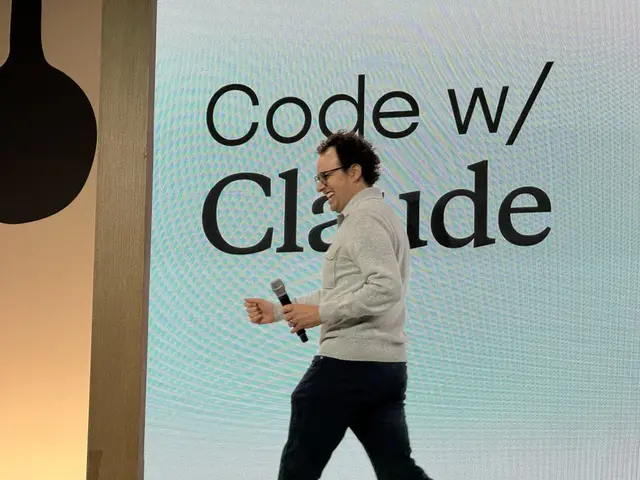
The Commerce team at Netflix successfully overhauled its software development lifecycle to enable safe co-shipping between human engineers and AI coding agents, as detailed by Mark Khuzam at QCon San Francisco 2026. Khuzam emphasized that the core effort involved documentation, achieving consistency, and refining review processes, rather than solely focusing on the agents themselves.
The team began by implementing a system where every engineer was issued Claude Code, prompting a discussion on shipping velocity, which quickly revealed significant hurdles. The initial attempt to have an agent update tests required four iterations, stemming from a complex sequence: starting with a simple "migrate this file" command, then adding instructions, specifying necessary APIs, and finally detailing data mocking procedures. Furthermore, locating relevant documentation proved difficult because the agent's context window filled before it could pinpoint the correct page, and the existing tests lacked uniformity across the entire codebase, resulting in the internal framework receiving a Net Promoter Score of -3 from developers.
Moving from a single test to an entire feature—spanning screens, data, routing, and tests—necessitated teaching the agent the team's specific building methodologies. Khuzam termed this necessary adjustment "context engineering," which involves embedding the knowledge held by engineers into what the agents can perceive. To address this, the team generated 45 architecture decision records, each specifically "written for people and for agents." These records encapsulate the context, the decision itself, relevant patterns and anti-patterns, and explicit instructions for AI usage, while also linking to associated code and documentation; these records are now integrated into nearly every repository.
To ensure that these records, alongside over 300 other documents, remain discoverable, the team adopted a methodology similar to how search engines index a website. Specifically, an AGENTS.md file, which serves as the primary instruction set for coding agents before any other action, functions analogously to a robots.txt file.
The latter part of the presentation focused on the code generated after an agent created it. Khuzam noted that the Continuous Integration pipeline retains its deterministic nature, managing builds, tests, screenshot comparisons, merge queues, and canary deployments. The transformation lies in how the agents integrate into each of these stages. A dedicated review agent now pre-examines every pull request against the established documentation and ADRs, flagging anti-patterns and assessing dependencies related to the proposed changes. Its initial iteration generated 23 comments on one pull request, beginning with the positive statement, "Overall this PR looks great!" However, it has since been refined to only issue verified blockers, each accompanied by supporting evidence, a suggested fix, and the specific ADR rule it contravenes. Engineers retain ownership of the code, as changes are not yet automatically merged; they can, however, apply a "revise" label to prompt the agent to review the feedback and push a correction to the same PR.
Reporting a significant improvement, Khuzam shared that in 2026, the core service experienced zero Sev 1 incidents, and the volume of pull requests increased by 32% year-over-year, leading to the developer NPS climbing from -3 to +25 across three quarters. Prior to the presentation, Khuzam had posed the critical question on LinkedIn: "Agents can write code, but what gives us the confidence to ship Tier 0 services to 300M+ members without everything falling apart?"
The challenge grew more complex when work spanned multiple services, as a product engineer developing a single feature might interact with the payment API, billing systems, the gateway, and every client interface, forcing the team to determine context ownership and how that context should follow the work. Several initial approaches proved insufficient: loading every repository was impractical, Git submodules proved too fragile, a Git MCP server "sees one file, not the system," and shared copies quickly became outdated. The requirement was for context that was accurate, portable across different agents, owned specifically by a domain, and kept current. The solution adopted was GraphRAG per domain, which derives structure from the codebase and meaning from the documentation and ADRs. Each graph is permanently tied to specific commits and delivered via a singular Model Context Protocol tool. Whether Claude Code, Cursor, Codex, a Slack bot, or the CI review system queries the graph, every response includes a citation pointing to a specific file and line number. Khuzam concluded by offering three guiding principles: clearly define the tasks for the agents, simplify the process for locating necessary information, and maintain the understanding that human judgment remains essential. He added, "None of this is new. It's good engineering, built for a new reader." Those interested in further details can watch the session video on InfoQ in the coming weeks, or review the session details provided there. An InfoQ summary of the previous week's content is distributed every Tuesday, inviting readers to join a community comprising over 250,000 senior developers.
Why it matters
This demonstrates a practical approach to integrating AI agents into existing, complex development workflows. Developers should watch how Netflix engineered context to bridge the gap between agent capabilities and production-grade systems. This offers a blueprint for tooling adoption in large-scale engineering environments.