· AI dev tools
Agentic AI Foundation: Angie Jones on building dependable coding agents with MCP and A2A
Ten new hires at Block once received a codebase they had never seen, access to AI agents, and a day and a half to solve customer-brought problems in person.
Despite this being their initial day, every one of them delivered results.
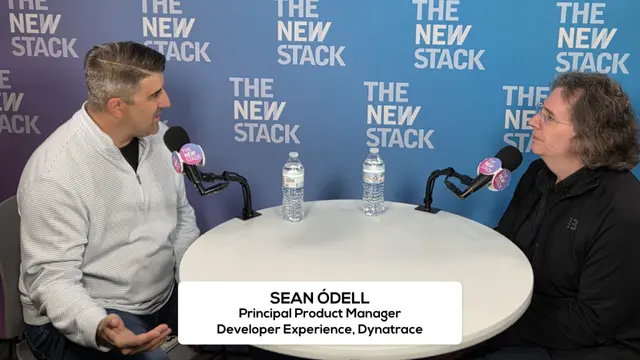
This scenario prompts a question for teams: what lessons might seasoned engineers glean from these newcomers? Angie Jones, vice president of the Agentic AI Foundation and lead developer, remarked to Frederic Lardinois of The New Stack during last month's AGNTCon + MCPCon North America in San Jose. She described the experience as "It is a rollercoaster ride."
Her discussion highlights a common tension for developers who adopt a new coding workflow only to see it become obsolete after the subsequent model release. Jones, who previously led AI enablement at Block and helped maintain the open-source coding agent Goose, differentiates between learning to interact with an agent versus mastering the construction of a reliable one.
The foundation's Model Context Protocol (MCP) teaches baseline developers how to link agents to applications, using Agent2Agent (A2A) as an illustration of a standard for agent coordination. Because several companies are converging on solutions for shared challenges, developers now possess interfaces they can build upon as these tools mature. Jones stated, "You can bet on it and say, 'I can build on top of this now.'"
However, significant engineering remains. Developing an agent requires understanding the cycle where it selects an action, evaluates the outcome, and determines the subsequent step. Someone must define the boundaries of this loop and dictate the agent's permissions regarding customer data.
The foundation offers an MCP Associate certification, allowing developers to prove their grasp of the protocol. Furthermore, its working groups address practical issues arising from agents' real-world deployment, covering security, identity, governance, and reliability.
At Block, Jones encouraged agent adoption by tasking a small group of engineers with simplifying the development environment for agents. Integrating this work meant developers could direct an agent toward a repository and benefit from the group's knowledge, even if they missed the preceding week's prompting lessons.
Regarding Goose, the maintainer's perspective addresses who ultimately approves what ships. Coding agents have simplified the process for proposing fixes or new features; yet, every pull request still requires a reviewer's attention. The project transitioned to an issue-first method, allowing contributors and maintainers to agree on the problem and design before any patch was generated. Jones emphasized this process: "Let's talk about the problem and the direction that we want to take with the maintainers, then collaborate on the design."
Goose's maintainers also leverage agents for security scans, triaging issues, and reviewing incoming code. While tools ease the opening of a pull request, discussions on issues provide contributors a space to explain why a change merits inclusion. Jones observed a parallel between this and human teams: "A new hire may know how to get an agent moving quickly. An experienced reviewer can help them see which of those changes are worth shipping."
Why it matters
This discussion highlights the tension developers face keeping up with rapidly changing AI workflows. Understanding standards like MCP and established processes for agent collaboration will be crucial for building reliable tools. Developers should watch how foundational frameworks address issues like security and governance as agents become more integrated.